Recently, conmecs investigated the performance of a 50″ pleasure yacht in regular waves. Next to the maximum accessible speed in waves @ a fixed thrust of 30kN, the passenger comfort due to ship motions and the acting loads resulting from slamming pressures were on focus of the project.
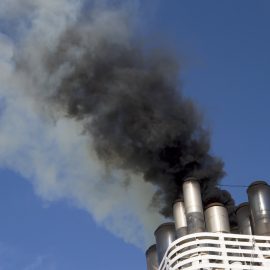
smoke gas propagation

The exhaust emissions from ships are not only discussed in terms of GHG (greenhouse gas) reductions. The operators of offshore supply vessels (OSV) are concerned about their technical employees who work primarily on deck and are exposed to the exhaust. In addition to these health matters, yacht and cruise ship operators want to avoid that passengers be disrupted by the smell of exhaust gases.
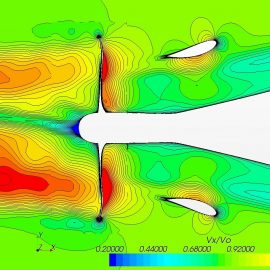
energy saving devices (ESD)

There are a lot of different energy saving devices (ESD) on the market, e.g. pre-swirl fins, ducts (Schneekluth, Mewis), and post-swirl devices (costa bulbs, rudder fins and hub fins). The suppliers promise efficiency rates, which lie within achieved rates of former projects and the spread is often relatively high, e.g. savings of “2 up to 6%”. For ship owners it is difficult to decide, which device is the best solution for their particular ship design.
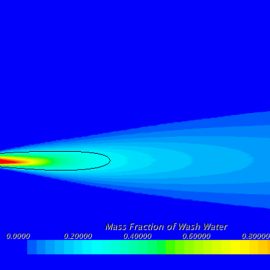
proof of MEPC.259(68) compliance

According to MEPC.259(68) the pH discharge criteria of scrubber systems can be approved by computational fluid dynamics or other equally scientifically established empirical formulae. Conmecs provides the calculation and documentation according to these requirements. If desired, conmecs can also take over the communication with the associated class society.
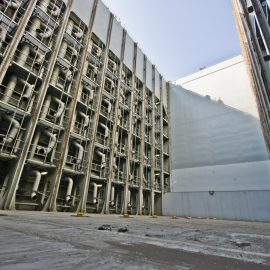
reefer cargo hold ventilation

About ten years ago the proper ventilation of perishable goods was an issue for some ship owners and operators. Many reefer cargo hold ventilation systems were designed with a weak performance and the cooling units of containers failed during transport due to intake temperatures above the cooling units maximum design temperature. This problem has been solved for many container ships due to the design of ventilation systems according to new regulations, which take into account conservative fresh air volume rates.